
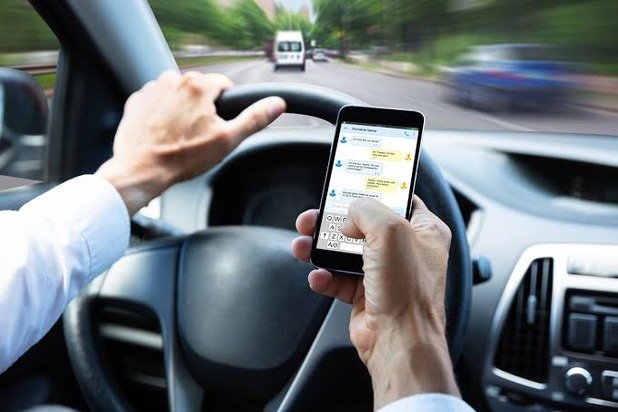
You’re sitting at a red light on Main Street, Route 303, or 9W. You glance down at your phone for a second — maybe to check a text, maybe just to silence a notification. The light turns green. You go. And then you see the flashing lights behind you.
A cell phone ticket in New York might feel like a minor annoyance. Pay the fine, move on. But that assumption can be expensive. As of February 2026, a single cell phone conviction now puts 6 points on your license — enough on its own to trigger a Driver Responsibility Assessment Fee on top of everything else you’ll owe. Here’s what you need to know:
What the Law Actually Says
New York’s Vehicle and Traffic Law covers cell phone violations under two sections:
- VTL § 1225-c — prohibits using a handheld mobile phone while operating a motor vehicle.
- VTL § 1225-d — prohibits using any portable electronic device while driving, which includes texting, browsing, using apps, or handling the device in virtually any way.
Both apply whether the car is moving or temporarily stopped in traffic. Sitting at a red light does not protect you. The law covers the act of holding and using the device — not just driving while distracted.
Hands-free use is legal. Bluetooth calls, a phone mounted on a dashboard holder with voice commands, and calling 911 are all permitted. But if the phone is in your hand, you’re at risk.
How Many Points? More Than You Think.
Since 2013, a cell phone or texting violation has carried 5 points on your New York driving record. That was already one of the highest single-ticket point values in the state.
Then, New York overhauled its entire driver violation point system. The changes — adopted in late 2024 and fully in effect as of February 2026 — raised cell phone and texting violations to 6 points. That one extra point matters more than it sounds, and we’ll explain why below.
For context, here’s where that puts a cell phone ticket among common violations:
- Speeding 1–10 mph over: 3 points
- Speeding 11–20 mph over: 4 points
- Speeding 21–30 mph over: 6 points
- Cell phone / texting violation: 6 points
- Reckless driving: 5 points
A single cell phone ticket now carries the same weight as speeding 21–30 mph over the limit. That should change how seriously you take it.
What Are the Fines for a Cell Phone Ticket in New York?
The fines themselves are tiered based on how many times you’ve been convicted within an 18-month period:
Base Fines
- First offense: $50–$150
- Second offense within 18 months: $50–$200
- Third or subsequent offense within 18 months: $50–$400
Mandatory Surcharge
On top of the base fine, every cell phone ticket comes with a mandatory court surcharge of $88 or $93 depending on the court jurisdiction. You don’t negotiate this — it’s automatic upon conviction.
Enhanced Fines: School Zones and Construction Zones
If you were ticketed in a school zone or active construction zone, the fines increase significantly:
- School zone: fine increases to $250
- Construction zone: fine increases to $400
Officers patrolling these areas are specifically watching for cell phone use, and these zones exist throughout Rockland County — including near schools in Clarkstown, Ramapo, and Orangetown.
The Hidden Hit: The Driver Responsibility Assessment Fee
Here’s where it gets significantly more expensive, especially under the new 6-point system.
New York’s Driver Responsibility Assessment Fee (DRAF) is triggered any time a driver accumulates 6 or more points within an 24-month period. The fee is paid directly to the DMV — separate from the court fine and surcharge.
Under the old rules, a cell phone ticket gave you 5 points, which didn’t trigger the DRAF on its own. Under the new rules, a single cell phone conviction gives you exactly 6 points — and that’s enough to trigger it immediately.
The DRAF breaks down like this:
- For 6 points: $300, paid over three years ($100/year)
- For each point above 6: an additional $75 per year
So if you have a cell phone ticket and even one other moving violation on your record from the past 24 months, the DRAF total climbs fast. And this fee is on top of everything else — the court fine, the surcharge, and any insurance increase.
The Long Tail: Insurance Costs
Insurance companies periodically pull their policyholders’ driving records. When a cell phone conviction appears, it’s treated as a high-point, high-risk offense.
Studies have shown that a single cell phone ticket can cause insurance premiums to increase by roughly 20 percent. For most drivers, that increase lasts three to five years — meaning the real cost of a “$150 ticket” can end up being several times that amount over time.
Special Concern: Junior Licenses and Probationary Drivers
If you hold a junior or probationary license, the stakes are even higher. A single cell phone conviction can result in an immediate license suspension — regardless of whether you have prior points. New York enforces strict standards for drivers in this category, and a conviction for a 6-point violation is treated very seriously.
Parents of teen drivers in Rockland County should be aware of this. What might be a manageable setback for an experienced adult driver can mean losing driving privileges entirely for a young person.
Can You Fight a Cell Phone Ticket in New York?
Yes. And given the stakes — 6 points, the DRAF, and a multi-year insurance increase — it’s almost always worth contesting rather than simply paying.
Many people plead guilty because they believe there is no way to fight the ticket. That’s a myth. A conviction requires that the officer clearly observed you holding and using the device. Common defenses include:
- No clear observation: The officer must have had a direct, unobstructed view of you using the device. Distance, lighting, angle, and traffic conditions all matter.
- The phone wasn’t in use: Holding a phone isn’t illegal by itself. The device must have been actively in use at the time of the stop.
- Hands-free use: If the phone was mounted and you were using voice commands, or using Bluetooth, that is a legal defense.
- Emergency use: Calling 911 or emergency services is explicitly permitted under New York law.
- Procedural issues: Errors in how the officer documented the stop, inconsistencies in their testimony, or improper stop procedures can all be challenged.
Even when an outright dismissal isn’t possible, a traffic attorney may be able to negotiate a reduction to a lower-point violation — which can make a meaningful difference for your insurance and for avoiding the DRAF threshold.
Got a Cell Phone Ticket in Rockland County?
These tickets may look simple on the surface, but a conviction can follow you for years through your insurance rates, your driving record, and the DMV’s assessment fees. Before you pay it and move on, it’s worth talking to an attorney.
At Ciganek Law Office in New City, we represent drivers all over Rockland and the greater Hudson Valley facing traffic violations of all kinds. Call us today for a free consultation.
“This Newsletter is for informational purposes only and is not intended to and should not be relied upon or construed as legal opinion or legal advice. Prior results do not guarantee a similar outcome.Contact a qualified legal professional for your specific situation”